US-Ireland R&D Partnership Programme Funding Success

Funding success for the Developmental Biomechanics group through the US-Ireland R&D Partnership Programme was announced today. The tripartite scheme enables researchers and teams from the Republic of Ireland, Northern Ireland and the USA to collaborate on ambitious research collaborations.

Our research focusses on how maternal exercise has a positive effect on development of the bones and joints in the unborn baby. We believe that our research could eventually lead to a prenatal intervention for babies at risk of abnormal skeletal development such as for example arthrogryposis or hip dysplasia. More details on the research are available here. The team is led by Niamh, Dr Joel Boerckel in the University of Pennsylvania, USA and Prof Gareth Davison in Ulster University.

The UCD news feature is linked here. We are very grateful to Research Ireland and the HRB for their support of the activities in the Republic of Ireland, and also to our partners’ funders; the NIH in the US and the HSC in Northern Ireland.
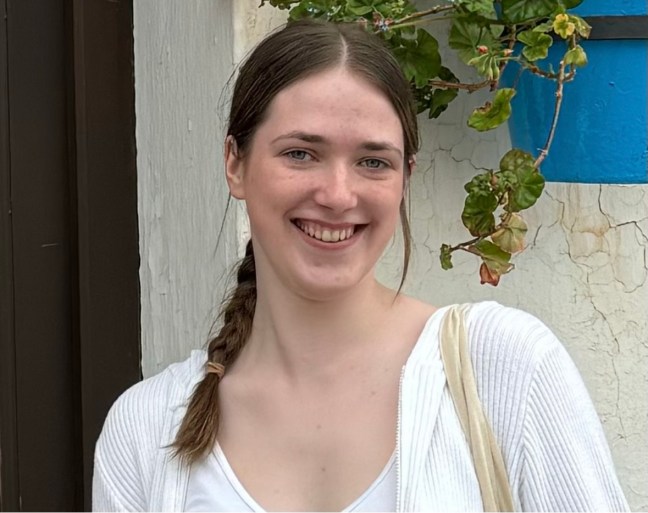
Undergraduate summer researcher Roisin Ryan awarded funding from Anatomical Society

Congratulations to Roisin Ryan, a student of UCD’s Biomedical Health & Life Sciences (BHLS) programme, has been awarded funding from the Anatomical Society for a summer research project in the Developmental Biomechanics Group. The Undergraduate Summer Vacation Research Scholarships provided by the Anatomical Society offers bursaries to enthusiastic undergraduate students to undertake research in the Anatomical Sciences in the summer vacation. Roisin’s project is entitled “How does hip joint size and morphology, and skeletal age, influence the risk of avascular necrosis in the paediatric hip?” and is a collaboration with Prof Connor Green and Dr Siobhán Hoare. Many thanks to the Anatomical Society for funding Roisin’s project, and welcome to the group Roisin!

Let’s learn more about Roisin, in her own words:

I’m Roisin Ryan and I’m from Limerick. I am going into my third year of the Biomedical, Health and Life Sciences course in University College Dublin and helping to conduct research on the topic of Perthes’ disease for the summer. When I’m not doing college work, you can probably find me in a bookshop or concert venue in Dublin!

Seed Funding Awarded for Collaboration with Northeastern University

Prof Nowlan has been awarded seed funding together with Dr Sandra Shefelbine in Northeastern University, USA, to kick off an exciting new collaboration. Sandra and Niamh were colleagues and collaborators together at Imperial College London, and are very excited to be able to collaborate together again. The project is entitled “Mechanical Evaluation of Cartilage Hierarchy and Neo-Organisation” and will characterise the sequence of events by which the structure, composition and function of articular cartilage emerge over postnatal development.

Full details of the partnership scheme and the five funded projects are described here.

Prof Nowlan awarded ERC Consolidator Grant

Prof Nowlan was awarded >€2 million through a prestigious ERC Consolidator Grant. The ‘ReZone’ project, aims to bring about enhanced regeneration of Articular Cartilage through activation of the developmental processes which form zonal functional cartilage in early life, and ultimately improve quality of life for patients with articular cartilage defects worldwide.

Professor Nowlan said: “I am thrilled and very grateful to be awarded an ERC Consolidator Grant. This will enable us to understand how mechanical loading affects the development of cartilage, with implications for both cartilage regeneration and for orthopaedic conditions affecting children. Articular cartilage is an amazing material that we depend upon for pain free movement. Due to its poor healing ability, cartilage needs to last a lifetime. What makes healthy cartilage low friction and long-lasting is its complex layered (zonal) structure, but current surgical techniques to fix damaged cartilage cannot recreate the original structure. Therefore, repair cartilage tends to break down, leading to the need for further surgeries and possibly even joint replacement.”

“In the ReZone project, we will find out how the zonal structure of cartilage forms after birth, and in particular how mechanical loading affects the cartilage layers. Through discovering how articular cartilage grows and develops, we hope to be able to (re)activate those processes in adults to be able to truly regenerate articular cartilage and help patients suffering from joint pain across the world. I would like to thank all of the people who helped in the preparation of the proposal, and all my collaborators. In particular I would like to acknowledge my key collaborator Professor Pieter Brama with whom I am excited to continue working closely. I would also like to acknowledge my funding sources to date in UCD, especially Science Foundation Ireland and Wellcome Leap”.

SFI Frontiers for the Future Funding Success

Funding worth in excess of €1.25 million from Science Foundation Ireland was announced for the project led by Prof Nowlan and Prof Brama was announced by Minister Simon Harris. The project entitled “Developmentally inspired approaches to cartilage defect healing” will be conducted over five years.

When injury to adult articular cartilage occurs, the defects do not heal, increasing the risk of joint disease and subsequent pain and suffering in humans and animals. In contrast, defects in immature cartilage can heal spontaneously, but there is little understanding of why only immature cartilage heals. Our aim is to recapitulate what happens in immature cartilage to heal adult cartilage defects. We will study which defects heal, and how, depending on animal age. We will use this knowledge to develop novel, ground-breaking treatments for cartilage repair in adult animals and humans.

Funding for stillbirth prevention research awarded by Wellcome Leap

A baby is stillborn every 16 seconds, leading to heartbreak for more than two million families worldwide per year. Despite advances in care for babies after birth, progress towards reducing the number of stillbirths is lagging behind. Over 50 per cent of stillbirths are associated with a reduction in the baby’s movements in the womb but there is currently no way to track a baby’s movements at home. 

Prof Nowlan, together with her collaborators Prof Ravi Vaidyanathan, Prof Christoph Lees & Mr Abhishek Ghosh (Imperial College London) and Prof Fionnuala McAuliffe (UCD) has been awarded a contract as part of Wellcome Leap’s In Utero programme, which aims to create the scalable capacity to measure, model and predict gestational development with a primary goal to reduce stillbirth rates by half. Wellcome Leap is a non-profit organisation founded by the Wellcome Trust to accelerate and increase the number of breakthroughs in human health globally. The team aims to determine how their monitor (called the FM monitor) can be used to measure a baby’s health in the womb. The FM monitor could potentially identify babies who are at risk of stillbirth and will also offer reassurance when the baby is healthy, thereby decreasing the rates of unnecessary induction of labour and early delivery.

The story was featured on the UCD website.